

How Long Do Enterprise Hard Drives Last? MTBF, AFR and Workload Ratings
Enterprise HDD Guides2 min read · SSDtrader Team
IN THIS ARTICLE
Enterprise hard drives are designed for five years of 24/7 operation. Manufacturers describe their reliability with MTBF, annualized failure rate (AFR) and a workload rating.
MTBF is a fleet statistic, not a lifespan
An MTBF of 2.5 million hours does not mean a drive lasts 285 years. It means that across a large population running within specification, failures are rare. Converted to AFR, 2.5 million hours is roughly 0.35% of drives per year.
Workload rating
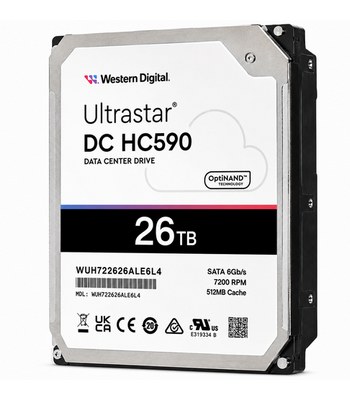
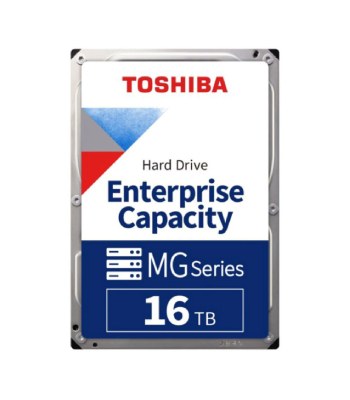
Enterprise HDDs such as the Seagate Exos, WD Ultrastar and Toshiba MG series are rated for about 550TB of reads and writes per year. Exceeding the rating does not cause immediate failure, but it falls outside the conditions the reliability figures assume.
The bathtub curve
- Early failures: manufacturing defects usually appear in the first weeks; burn-in testing catches many of them.
- Useful life: a long period of low, random failure rates.
- Wear-out: after about 5 years, mechanical wear raises failure rates, which is why most fleets refresh on a 5-year cycle.
Practical tips
- Monitor SMART attributes such as reallocated and pending sectors.
- Keep drive temperatures within specification.
- Replace drives in aging RAID groups proactively to avoid rebuild failures.
- Size new arrays with high-capacity helium drives such as 26TB HC590 or 16TB MG08 to reduce drive count.
Related products
Specifications are summarized from manufacturer datasheets and can vary by capacity and firmware; please verify against the datasheet for your platform. Trademarks belong to their respective owners; SSDtrader is an independent distributor.