

How Long Do Enterprise SSDs Last? TBW, DWPD and Real-World Lifespan
SSD Technology Explained2 min read · SSDtrader Team
KEY TAKEAWAYS
- Endurance is rated as DWPD (drive writes per day) or TBW (terabytes written); they convert easily.
- Most read-heavy servers use only a fraction of their rated endurance before they are retired.
- Check 'Percentage Used' (NVMe) or wear indicators (SAS/SATA) before buying pulled drives.
IN THIS ARTICLE
NAND flash wears out as it is written, so every SSD has a finite write budget. Enterprise drives express that budget as DWPD or TBW.
DWPD and TBW
- DWPD (drive writes per day): how many times the full capacity can be written every day for the warranty period.
- TBW (terabytes written): the total amount that can be written over the drive's life.
They convert easily: TBW ≈ DWPD × capacity (TB) × 365 × warranty years. A 7.68TB drive at 1 DWPD over 5 years is rated for about 14,000TB written.
Estimating lifespan for your workload
Expected life (years) ≈ TBW ÷ (TB written per day × 365 × write amplification). For example, a 3.84TB read-intensive drive rated around 7,000 TBW that receives 1TB of host writes per day with a write amplification of 2 would last roughly 9–10 years before reaching its rating. Most read-heavy servers retire drives for capacity reasons long before wear-out.
What extends SSD life
- Over-provisioning: spare NAND hidden from the user absorbs bad blocks and reduces write amplification. Mixed-use drives have more of it.
- Controller algorithms: wear levelling and garbage collection affect real-world endurance as much as NAND type.
- Right-sizing: a larger drive spreads the same writes across more NAND.
Checking remaining life
Use SMART or NVMe health logs. NVMe drives report "Percentage Used", and SAS/SATA drives report wear or media-wearout indicators. When buying pulled or open-box drives, ask the supplier for a health report showing these values.
Worked examples
| Drive | Rating | Approx. TBW | At 1TB/day host writes (WAF 2) |
|---|---|---|---|
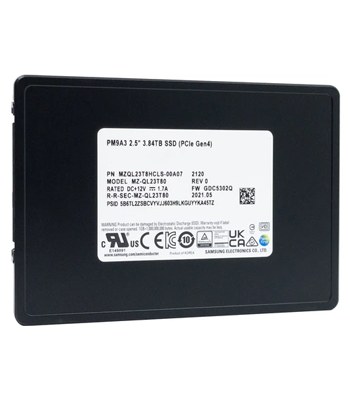
| PM9A3 3.84TB | 1 DWPD / 5 yr | ~7,000TB | ~9–10 years |
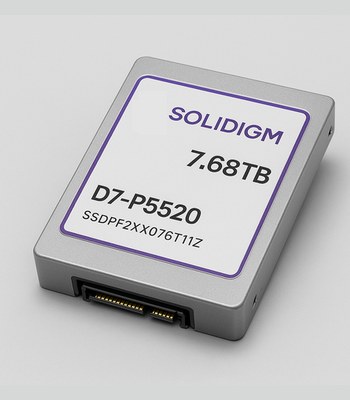
| P5520 7.68TB | 1 DWPD / 5 yr | ~14,000TB | ~19 years |
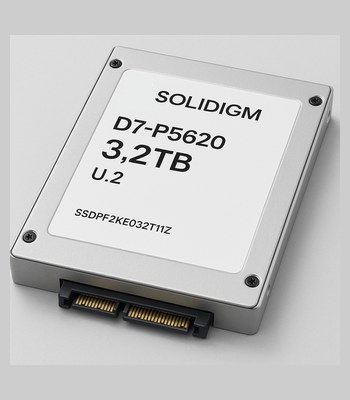
| P5620 3.2TB | 3 DWPD / 5 yr | ~17,500TB | ~24 years |
| PM893 960GB | ~1 DWPD / 5 yr | ~1,700TB | ~2–3 years |
The last row shows why capacity matters: the same daily writes wear a small drive much faster. If a 960GB boot drive also hosts logs or databases, choose a larger or mixed-use model.
What write amplification means
Write amplification factor (WAF) is the ratio of data written to NAND versus data sent by the host. Random small writes, full drives and RAID parity raise it; sequential writes and free space lower it. Leaving 10–20% of a drive unpartitioned is a simple way to reduce WAF on read-intensive drives.
Reading SSD health
- NVMe:
nvme smart-log /dev/nvme0shows Percentage Used, Data Units Written and media errors. - SAS/SATA:
smartctl -a /dev/sdXshows wear-levelling or media-wearout indicators and reallocated blocks. - Server management controllers (iDRAC, iLO, XClarity) report remaining life for supported drives.
When to replace an enterprise SSD
- Percentage Used approaches 100% or the drive reports critical warnings.
- Media or CRC errors increase over time.
- The drive is out of warranty in a critical system and replacement parts are becoming scarce.
Related products
Frequently asked questions
Does an SSD stop working at 100% endurance?
Not immediately. The rating is a warranty limit; many drives keep working beyond it, but error rates rise, so plan replacement for critical data.
Do reads wear out an SSD?
No. Endurance ratings count writes. Reads have negligible effect on NAND wear.
Are pulled enterprise SSDs a good buy?
They can be, if health data shows low wear and the supplier offers a warranty. Ask for SMART reports before ordering.
Is QLC endurance enough for servers?
For read-dominated workloads such as content delivery and analytics, yes. QLC drives like the D5-P5316 are rated for lower endurance, so avoid write-heavy uses.
Specifications are summarized from manufacturer datasheets and can vary by capacity and firmware; please verify against the datasheet for your platform. Trademarks belong to their respective owners; SSDtrader is an independent distributor.