

Samsung PM9A3 vs PM893 vs PM1653: Which Enterprise SSD Fits Your Server?
Enterprise SSD Buying Guides4 min read · SSDtrader Team
KEY TAKEAWAYS
- PM9A3 = PCIe 4.0 NVMe for U.2/M.2/E1.S servers; PM893 = SATA; PM1653 = 24G dual-port SAS for arrays.
- All three are read-intensive drives rated around 1 DWPD with power-loss protection and 5-year warranty.
- Pick by backplane first, then by workload and OEM part-number requirements.
IN THIS ARTICLE
Samsung's PM9A3, PM893 and PM1653 are three of the most frequently quoted enterprise SSDs on the secondary and project market. They share Samsung's own controller and V-NAND, but they target very different server platforms: NVMe U.2 slots, legacy SATA backplanes and dual-port SAS storage arrays. This guide explains where each one fits and lists the part numbers buyers ask for most.
At a glance
| PM9A3 | PM893 | PM1653 | |
|---|---|---|---|
| Interface | PCIe 4.0 x4 NVMe | SATA 6Gb/s | SAS 24Gb/s, dual-port |
| Form factors | 2.5" U.2 (7 mm), M.2 22110, E1.S | 2.5" (7 mm) | 2.5" (15 mm) |
| Capacities | 960GB – 15.36TB | 240GB – 7.68TB | 960GB – 30.72TB |
| Sequential read | up to ~6,900 MB/s | up to ~550 MB/s | up to ~4,300 MB/s |
| Endurance class | ~1 DWPD, 5 years | read-intensive (~1 DWPD) | ~1 DWPD, 5 years |
| Best fit | NVMe servers, cloud, AI data pipelines | SATA servers, upgrades of older platforms | SAS arrays, mission-critical storage |
PM9A3: PCIe 4.0 NVMe for data-center servers
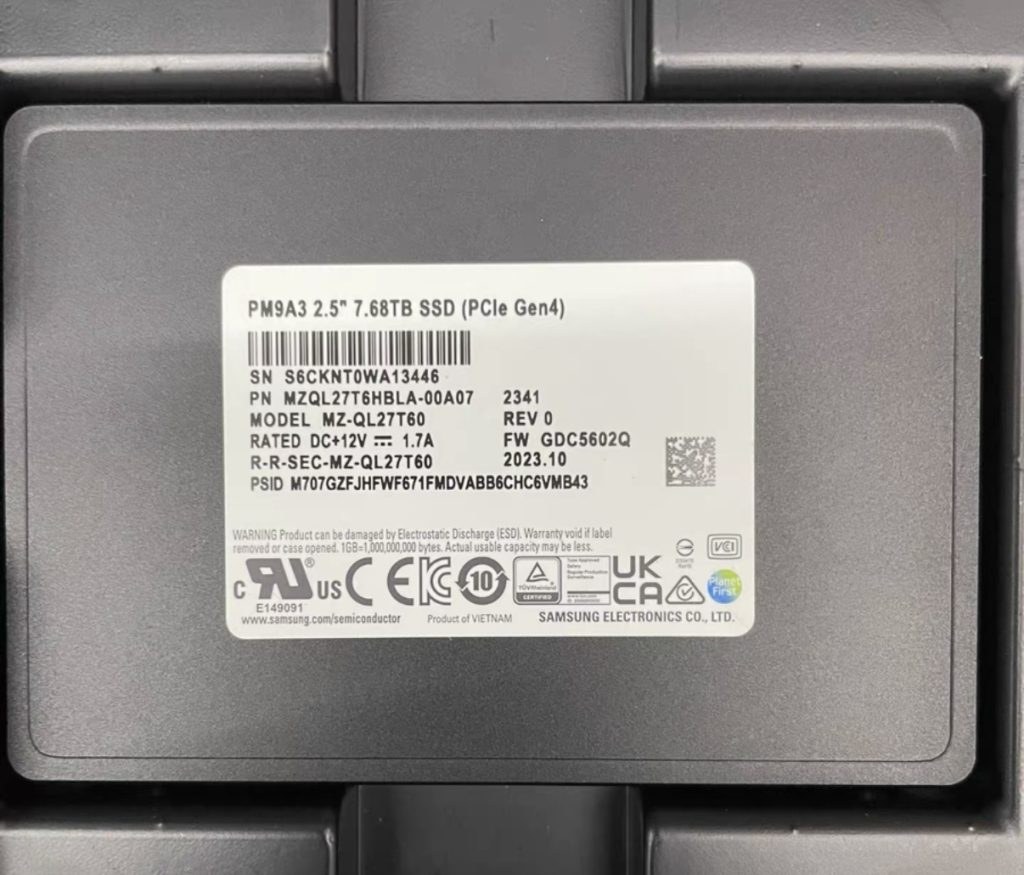
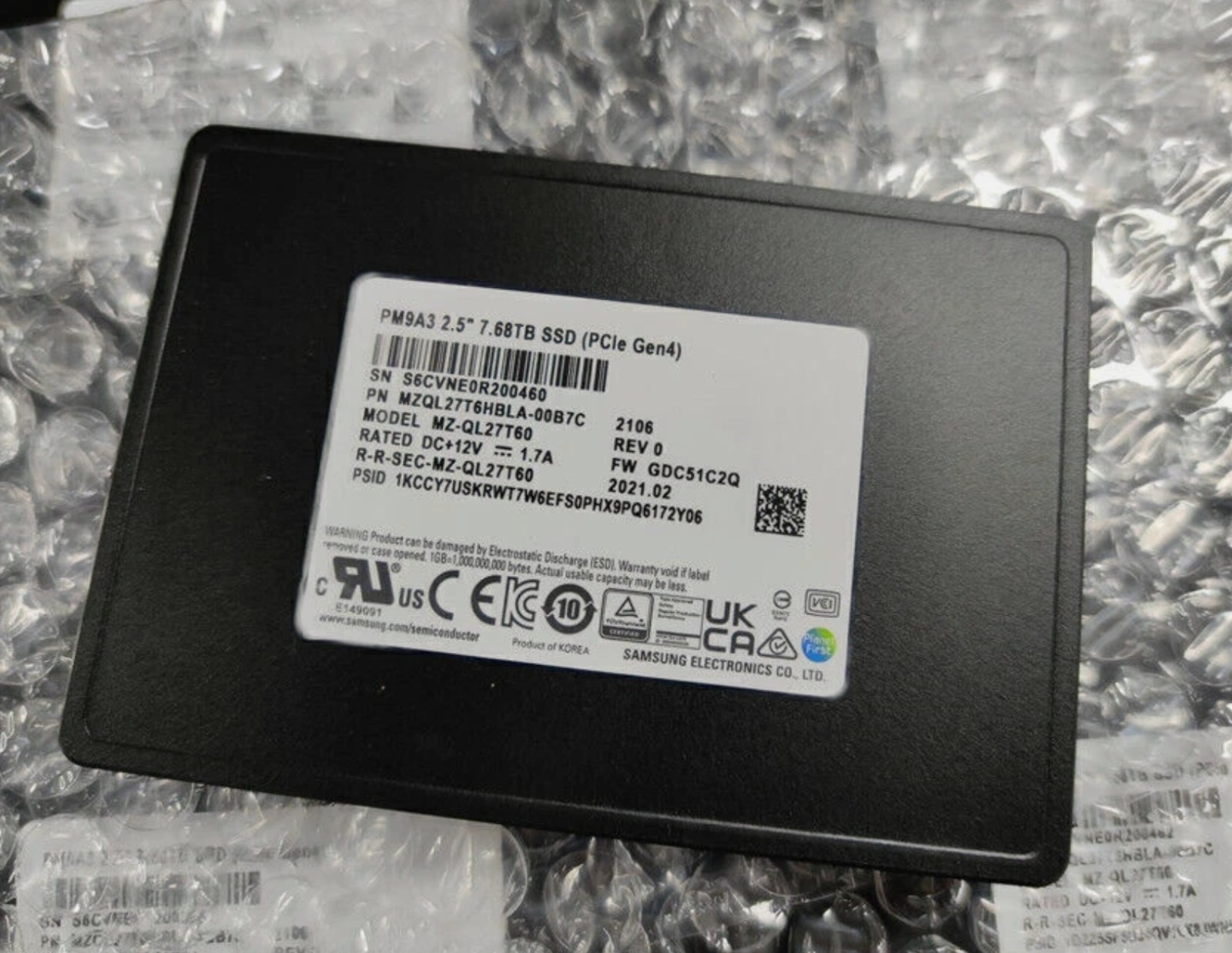
The PM9A3 is Samsung's mainstream data-center NVMe drive. It uses sixth-generation V-NAND with power-loss protection and end-to-end data protection, and it is rated for 1 drive write per day over a 5-year warranty period. It is the default choice when a server has free U.2 NVMe bays and the workload is read-heavy: virtualization hosts, web and database front-ends, caching tiers and AI data loading.
- 960GB: MZQL2960HCJR-00A07
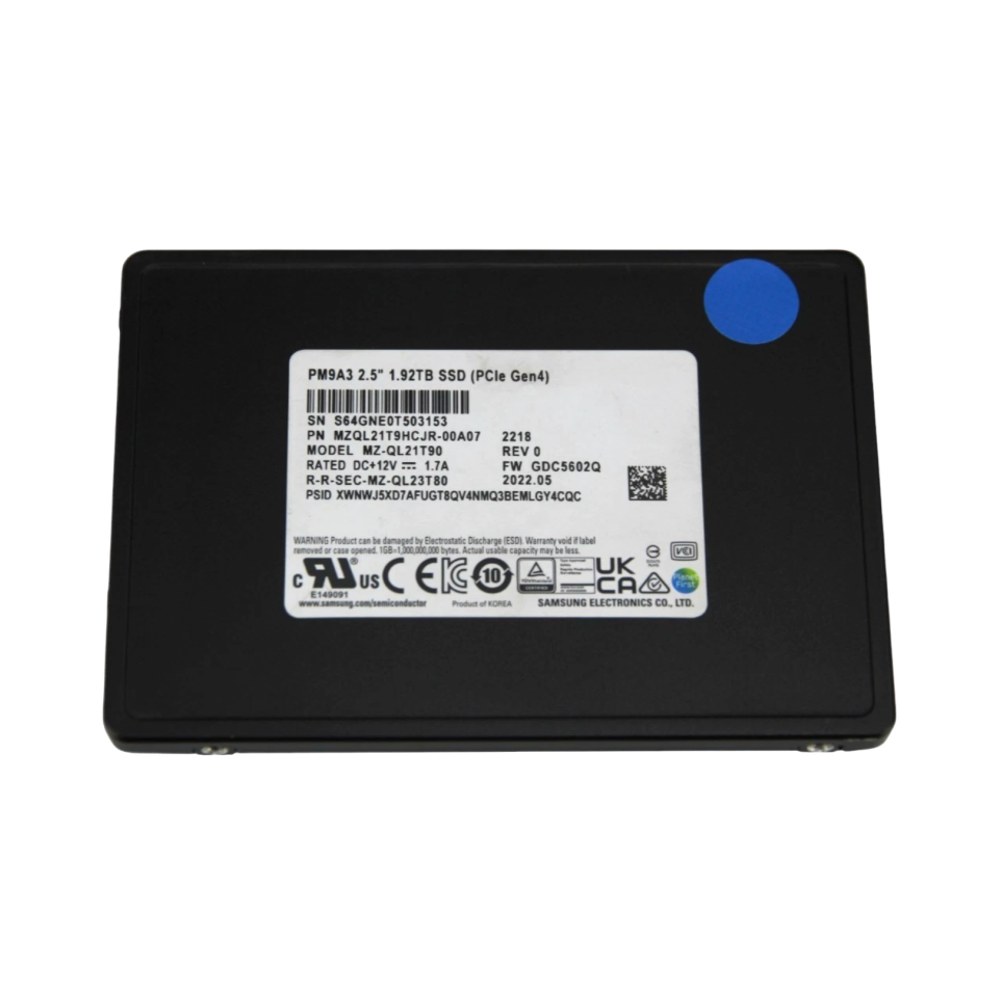
- 1.92TB: MZQL21T9HCJR-00A07
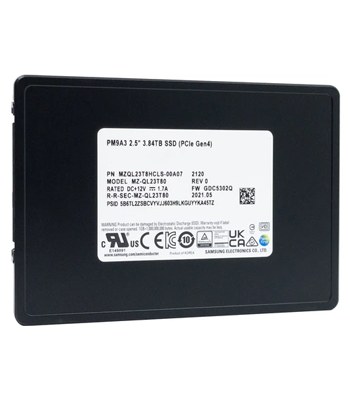
- 3.84TB: MZQL23T8HCLS-00A07
- 7.68TB: MZQL27T6HBLA-00A07
- 15.36TB: MZQL215THBLA-00A07
PM893: the SATA workhorse
Many servers still ship with SATA backplanes. The PM893 drops straight into those slots, delivers the full ~550/520 MB/s that SATA allows and adds the enterprise features consumer SATA drives lack: power-loss protection, consistent latency under sustained load and a 5-year limited warranty. It is a cost-effective way to refresh file servers, boot volumes and edge nodes without changing the platform.
- 480GB: MZ7L3480HCHQ-00A07
- 960GB: MZ7L3960HCJR-00A07
- 3.84TB: MZ7L33T8HBLT-00A07
- 7.68TB: MZ7L37T6HBLA-00A07
PM1653: 24G SAS for storage arrays
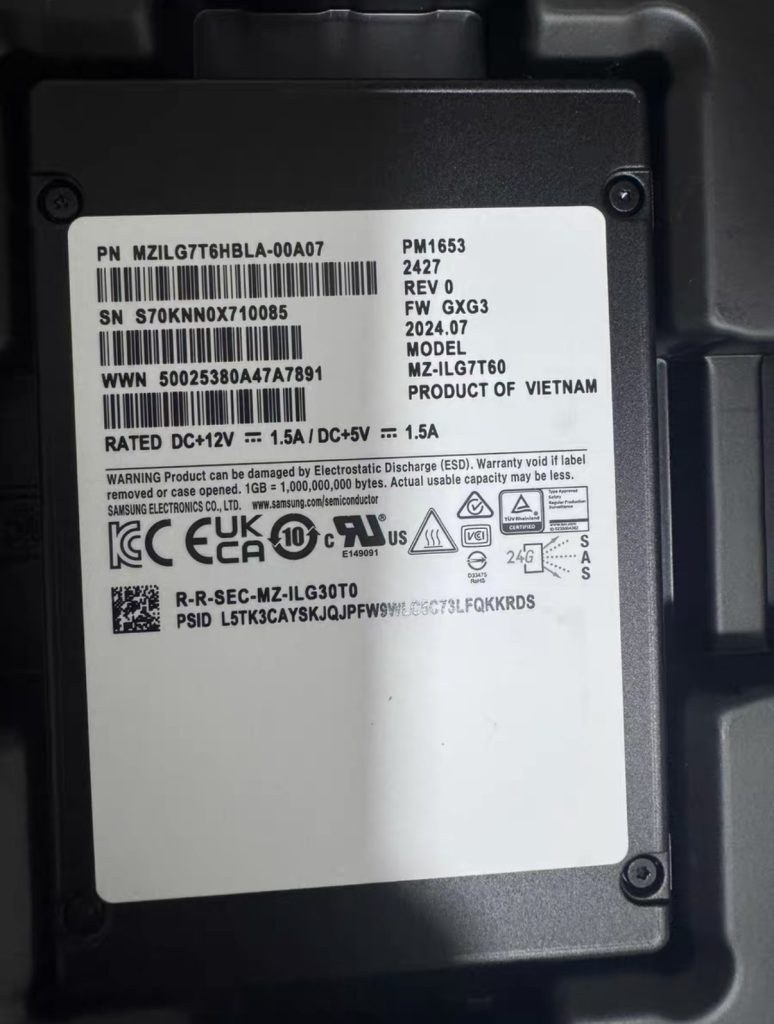
The PM1653 is built for SAS-based storage systems. Its 24Gb/s SAS-4 interface doubles the link speed of 12G SAS, and the dual-port design lets two controllers reach the same drive, so a single controller failure does not interrupt service. It is the natural successor to the PM1643a in arrays and servers that support SAS-4, and it is backward compatible with 12G SAS controllers at the lower link speed.
- 960GB: MZILG960HCHQ-00A07
- 1.92TB: MZILG1T9HCJR-00A07
- 3.84TB: MZILG3T8HCLS-00A07
- 7.68TB: MZILG7T6HBLA-00A07
- 15.36TB: MZILG15THBLA-00A07
How to choose
- Check the backplane first. U.2 NVMe, SATA and SAS bays are not interchangeable even though the drives look similar.
- Match endurance to writes. All three are read-intensive (~1 DWPD). For heavy write workloads, look at mixed-use drives instead.
- Confirm the OEM part number. Dell, HPE, Lenovo and NetApp often require their own firmware-labelled versions of these drives.
Performance in context
Raw sequential numbers make the PM9A3 look more than ten times faster than the PM893, but the gap that matters depends on the workload. For random 4K reads, the access pattern of most databases and virtual machines, NVMe drives still lead by a wide margin because they avoid the SATA/AHCI command overhead and run deep parallel queues. For large sequential reads such as backups or media streaming, a RAID group of SATA drives can be good enough when the server only has SATA bays.
| Workload | Best fit | Why |
|---|---|---|
| Virtualization hosts, VDI | PM9A3 | High random IOPS and low latency per VM |
| OLTP databases | PM9A3 or PM1653 | NVMe for direct-attach servers; dual-port SAS where arrays need controller failover |
| File, mail and web servers on older platforms | PM893 | Drops into existing SATA bays without new controllers |
| Shared SAS storage arrays | PM1653 | Dual-port 24G SAS keeps data available if one controller fails |
| Boot and OS volumes | PM893 (small capacities) | Low cost per drive; performance needs are modest |
Endurance and reliability
Samsung rates all three families for roughly one full-capacity write per day over five years, and specifies 2 million hours MTBF for the PM9A3 and PM1653. In practice this means a 3.84TB drive can absorb about 7,000TB of writes during its warranty life. That is more than enough for read-heavy servers; if your daily writes exceed the drive capacity, look at mixed-use drives instead.
OEM versions and part numbers
Dell, HPE, Lenovo, NetApp and other OEMs sell these same drives under their own part numbers with OEM firmware. A PM1653 7.68TB, for example, appears as MZILG7T6HBLA-00A07 in Samsung's channel and under different OEM numbers in Dell or HPE servers. When a server or array checks drive firmware, order the OEM version; for generic servers, the Samsung channel part number is usually the better value.
Buying checklist
- Confirm the bay type and the maximum drive height (7 mm vs 15 mm).
- Decide between Samsung channel and OEM part numbers.
- Match capacity across a RAID group.
- Ask for firmware version and, for pulled drives, SMART health data.
- Agree warranty terms and lead time in the quote.
Related products
Frequently asked questions
Can I put a PM9A3 in a SATA slot?
No. The PM9A3 is an NVMe drive and needs a U.2/U.3 NVMe bay, an M.2 slot (M.2 version) or an E1.S bay. SATA and SAS backplanes cannot run it.
Does the PM1653 work with a 12G SAS controller?
Yes. The PM1653 is backward compatible with 12Gb/s SAS controllers; it simply runs at the lower link speed.
Is the PM893 a good boot drive?
Yes. Its power-loss protection and 5-year warranty make it a reliable OS drive for servers with SATA bays.
Which is best for a new NVMe server?
For PCIe 4.0 servers with U.2 bays, the PM9A3 is the usual default. For PCIe 5.0 platforms, consider the PM1743.
Specifications are summarized from manufacturer datasheets and can vary by capacity and firmware; please verify against the datasheet for your platform. Trademarks belong to their respective owners; SSDtrader is an independent distributor.