

Solidigm (Intel) P-Series vs S-Series SSDs: NVMe or SATA for Your Servers?
2026-10-28
Enterprise SSD Buying Guides2 min read · SSDtrader Team
Intel, and now Solidigm, split data-center SSDs into P-series (PCIe/NVMe) and S-series (SATA). Both are enterprise-grade; the right choice depends mostly on your server's drive bays.
| S-series (SATA) | P-series (NVMe) | |
|---|---|---|
| Interface | SATA 6Gb/s | PCIe 3.0 / 4.0 / 5.0 NVMe |
| Sequential read | ~550 MB/s | ~3,000 MB/s (Gen3) to ~14,000 MB/s (Gen5) |
| Random read | up to ~100K IOPS | hundreds of thousands to millions of IOPS |
| Bays | Any SATA/SAS backplane | U.2/U.3, E1.S, E3.S or PCIe slots |
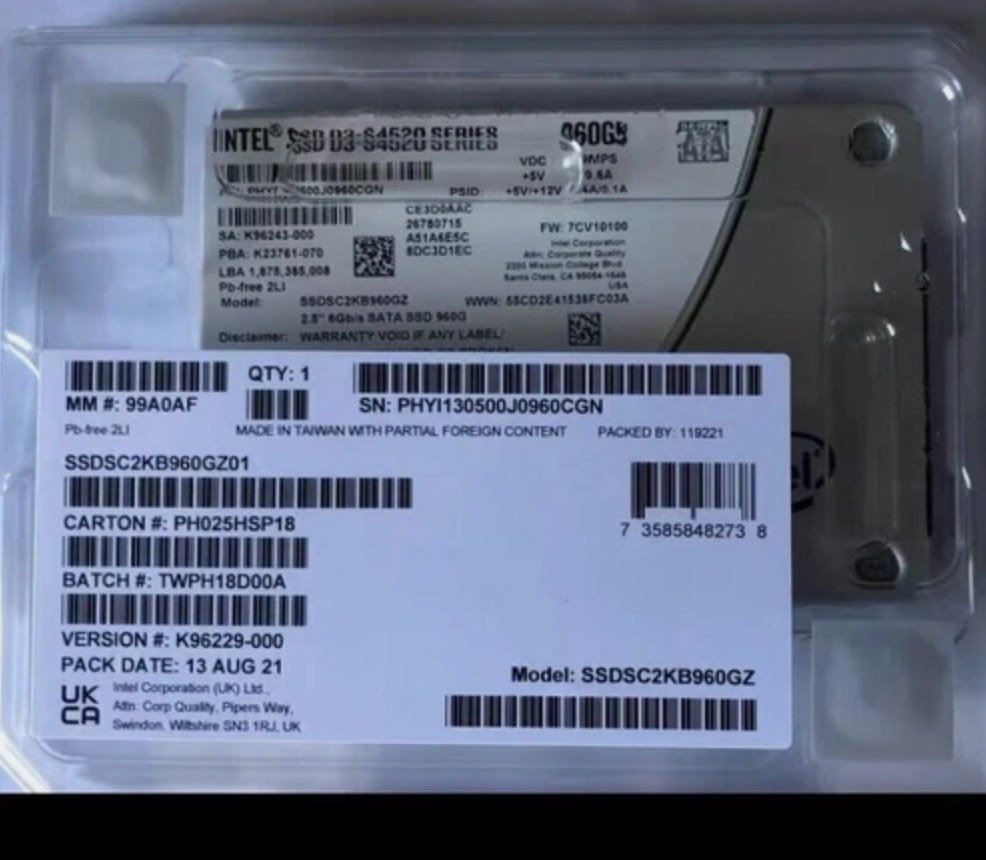
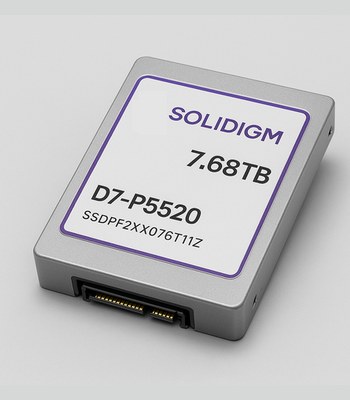
| Read-intensive models | S4510, S4520 | P5520 |
| Mixed-use models | S4610, S4620 | P5620 |
Choose S-series when
- The server only has SATA or SAS backplanes.
- You need boot drives or capacity for moderate workloads at the lowest cost.
- You are replacing failed drives in an existing SATA RAID group.
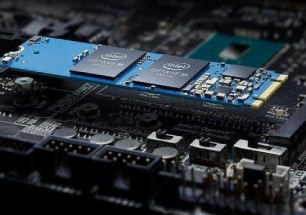
Choose P-series when
- The server has NVMe U.2, U.3 or EDSFF bays.
- Latency and IOPS matter: databases, virtualization, analytics, AI pipelines.
- You want more performance per rack unit.
Related products

Need a quote?Tell us your server model and we will confirm whether its bays take SATA, SAS or NVMe, then quote matching Solidigm drives.
Specifications are summarized from manufacturer datasheets and can vary by capacity and firmware; please verify against the datasheet for your platform. Trademarks belong to their respective owners; SSDtrader is an independent distributor.